How to Create a Customer Persona (With a Free Template)
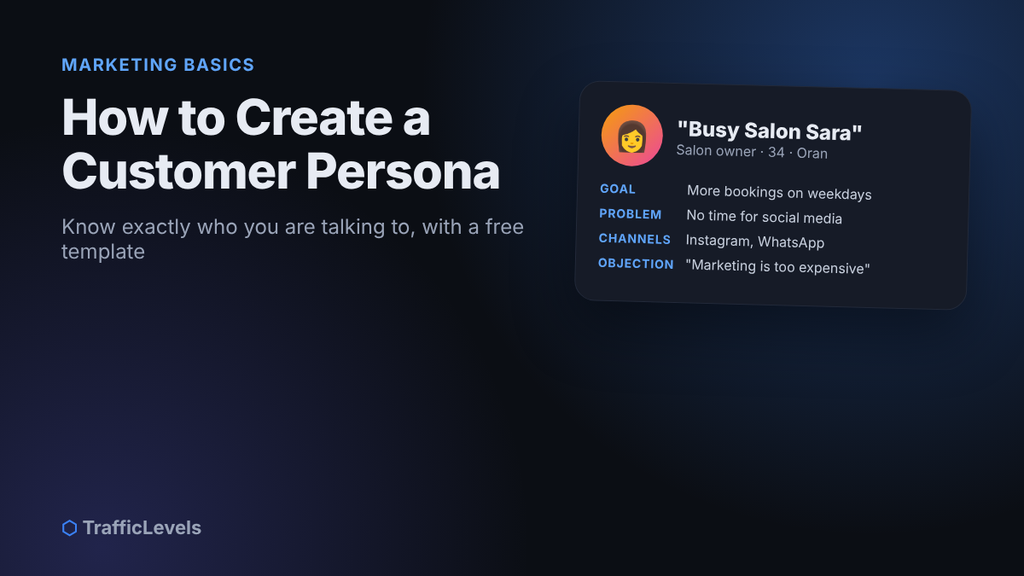
“Our customers are everyone” is one of the most expensive sentences in marketing. When you try to speak to everyone, your posts, ads and website end up speaking to no one in particular. The message becomes vague, the targeting becomes broad and your budget disappears without clear results.
A customer persona fixes this. It is a short, realistic profile of the kind of person you most want to serve, based on real information about your customers. In this guide you will learn what a customer persona is, what to include, where to find the information, how to build one step by step with a free template you can copy, and how to use it to write better content and run better ads.
What is a customer persona?
A customer persona (also called a buyer persona) is a semi-fictional description of your ideal customer. It has a name, a short background, goals, problems and buying habits, all based on patterns you see in real customers.
The persona is not a real individual, and it is not a guess. It is a summary of what many of your best customers have in common, written in a way that makes it easy to imagine one person while you write a caption, plan a campaign or design a page.
Why personas improve your marketing
- Clearer messages. You know which problems to mention and which words to use.
- Better targeting. You can choose the right platforms, locations and interests for your ads.
- Better offers. You understand what customers value and what stops them from buying.
- More consistent content. Everyone who writes or designs for your business has the same person in mind.
- Less waste. You stop spending time and money on channels and messages that do not fit your audience.
A persona is also the foundation of a good marketing plan. If you have not written one yet, see our simple marketing plan for small businesses.
What to include in a customer persona
- Who they are: age range, location, job or life situation, and anything that affects how they buy (for example, “runs a small business with two employees”).
- Goals: what they want to achieve, such as more bookings, saving time or looking professional.
- Problems and frustrations: what is not working for them today and why they start looking for help.
- Where they spend time: social platforms, websites, groups, events or places in your city.
- Objections: what makes them hesitate, such as price, trust, time or past bad experiences.
- Their own words: real phrases customers use to describe their problem. These are gold for headlines and captions.
- How they decide: do they compare prices, ask friends, read reviews or decide quickly?
Keep it to what affects your marketing. A persona’s favourite colour or film is usually irrelevant.
Where to find real customer information
- Short customer interviews. Ask five to ten of your best customers for a 10-minute chat. Ask why they chose you, what problem they had and what almost stopped them from buying.
- Messages and emails. Look at the questions people ask before they buy. They reveal doubts and priorities.
- Reviews. Read your own reviews and those of competitors. Note what people praise and complain about.
- Social media comments under posts in your niche, including competitors’ posts.
- Analytics. Website and social media insights show age ranges, locations and devices of your audience.
- Your team. Anyone who talks to customers every day knows their most common questions and concerns.
How to create a persona in 5 steps
- Collect your notes from interviews, messages, reviews and analytics in one document.
- Look for patterns. Group similar answers: the same goals, the same frustrations, the same objections.
- Give the persona a name and a short story, such as “Café Owner Karim” or “Busy Salon Sara”. A memorable name makes it easier to use in daily decisions.
- Fill in the template below using only what the data supports.
- Write one key message: one sentence that tells this persona why your business is the right choice for them.
Free persona template (copy and fill in)
- Persona name:
- Short description (age range, location, role or situation):
- Main goal:
- Biggest problem or frustration:
- Where they spend time online and offline:
- Main objection to buying:
- How they make decisions:
- Phrases they use (real quotes):
- Our key message for them:
Example persona
Café Owner Karim, 41, runs a small café in Algiers with two employees. Mornings are busy, but afternoons are quiet. He posts on Instagram sometimes, but his posts get few likes and do not bring visits. He once tried paid ads without a clear plan and lost money, so he is careful about spending. In his own words: “I need more people coming in after lunch.” He values simple steps, clear results and someone local who understands his market.
Key message: “Simple local promotions that bring more walk-in customers to your café in the afternoon, with a clear budget and results you can see.”
With this persona, the content becomes obvious: short videos of afternoon specials, a Google Business Profile with fresh photos, local ads around lunch time and offers for nearby offices. Compare that with “marketing for businesses”, and you can see why personas help.
How to use your persona every day
- Content: before writing a post, ask “Would Karim care about this? Does it solve his problem?” Use his words in your hooks.
- Ads: choose locations, ages and interests that match the persona, and write the ad around their main problem. If you are starting, see how to set up your first Facebook ads campaign.
- Website and landing pages: make the first headline speak directly to the persona’s goal. Our guide to landing pages that convert shows how.
- Offers and pricing: address the main objection directly, for example with a small starter package, a guarantee or examples of results.
- Customer service: prepare answers to the questions this persona asks most.
Common persona mistakes
- Inventing the persona from assumptions instead of talking to real customers.
- Creating too many personas. Most small businesses need one to three.
- Adding irrelevant details that do not change your marketing decisions.
- Writing it once and forgetting it. Keep it visible and use it when planning content and campaigns.
- Never updating it. Customers, platforms and markets change. Review your persona every six to twelve months.
Customer persona checklist
Research: talk to five to ten real customers, collect common questions, read reviews and comments and check your analytics.
Use it: keep one page per persona, write posts in their words, target ads to their profile and update the persona every six to twelve months.
Frequently asked questions
How many customer personas should a small business have?
Start with one main persona: the type of customer that brings you the most value. Add a second or third only if you serve clearly different groups with different needs.
What if I do not have customers yet?
Talk to people who match your intended audience, read reviews of similar businesses and look at questions in relevant groups and forums. Create a first draft, then update it once real customers arrive.
Is a persona the same as a target market?
No. A target market is a broad group, such as “small cafés in Algiers”. A persona describes one representative person inside that group, with goals, problems and objections, which makes it much easier to write for.
How long should a persona be?
One page is ideal. If it is too long to read in a minute, it will not be used.
Summary
A customer persona turns “everyone” into a real person you can speak to. Research your best customers, find the patterns in their goals, problems and objections, summarise them on one page with a memorable name and use that page every time you write content, create ads or design an offer. The clearer you are about who you are talking to, the more people will feel that your business is made for them.
Want help defining your audience and building campaigns around it? Explore our services and packages, or contact us.
Want help growing faster?
Tell us about your channel, page or website and we'll suggest the right package.
See Packages Ask on TelegramKeep reading
Best Ways to Make Money From Home: Real Options That Actually Pay
In 2024, 13.3% of people in the United States worked from home, but the best income path still depends on how you want to work. If…
Read more →Affiliate Marketing Platform Case Study: Growing Sales
A business with a solid offer can still struggle to reach new customers consistently, and an affiliate marketing platform may offer a way to build that…
Read more →