How to Use LinkedIn to Grow Your Business: A Practical Guide
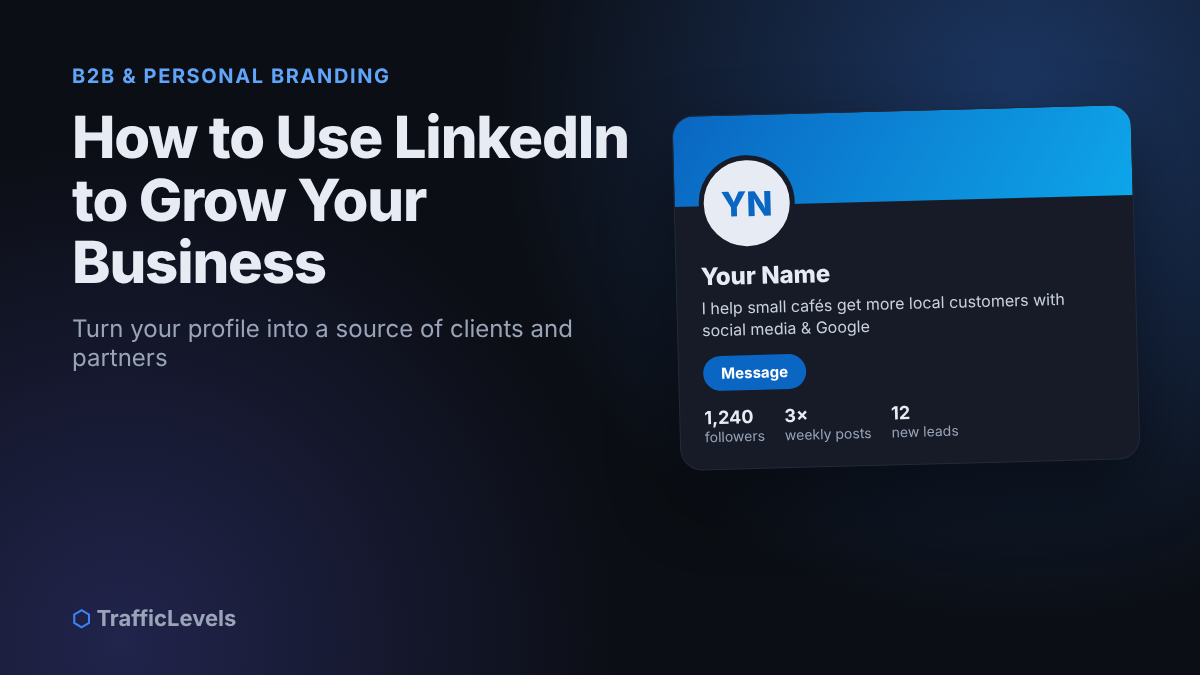
Many small business owners think of LinkedIn as a place for job seekers and big corporations. In reality, it is one of the best platforms for finding clients, partners and opportunities, especially if you sell services to other businesses: marketing, design, consulting, accounting, training, software or B2B products.
On LinkedIn, people are in a professional mindset. Decision-makers are there, and helpful posts can reach beyond your own network when people react and comment. In this guide you will learn how to optimize your profile, set up a Company Page, write posts that people read, build a relevant network and turn conversations into clients, all in around 20 minutes a day.
Is LinkedIn right for your business?
LinkedIn works especially well if:
- your customers are businesses, managers or professionals,
- you sell a service or expertise where trust matters,
- you want partners, suppliers or collaborators,
- or you want to build your reputation as an expert in your field.
If you mainly sell low-cost products to consumers, platforms such as Instagram, TikTok or Facebook may bring faster results. Many businesses still use LinkedIn for recruiting, partnerships and credibility.
Step 1: Optimize your personal profile
On LinkedIn, people connect with people. For most small businesses, the owner’s personal profile brings more attention than the Company Page, so start there.
- Professional photo. A clear, friendly photo of your face with good lighting and a simple background.
- A headline that explains your value. Instead of only “Owner at ABC Studio”, write who you help and how: “I help small cafés get more local customers with social media and Google”. Your headline appears next to your name almost everywhere on LinkedIn.
- Banner image. Use the space behind your photo to show your service, a short promise or your website address.
- About section. In a few short paragraphs, describe the problem your clients have, how you help, one or two results and how to contact you.
- Featured section. Pin your best case study, a helpful guide, a portfolio or a page about your services.
- Experience and skills. Describe what you achieved, not just your job title. Add relevant skills so people can find you.
If you are building a service business, our guide on building a portfolio that wins clients shows what to put in your Featured section.
Step 2: Create a Company Page
A Company Page gives your business an official presence, helps people verify that you are real and lets employees link to your business. Fill in:
- your logo and a cover image,
- a clear description with your main services and location,
- your website link and a call-to-action button,
- and regular updates, such as company news, helpful posts and job openings.
Share your Company Page’s best posts from your personal profile too, since personal profiles usually reach more people.
Step 3: Post content that people read
The best LinkedIn content is useful, specific and personal. Four post types work well for small businesses:
- Lessons learned: a mistake, surprise or insight from your work.
- How-to posts: practical steps your audience can apply immediately.
- Case studies: a client’s problem, what you did and the result (with permission).
- Opinions: your honest view on a common belief in your industry.
How to write a LinkedIn post
- Start with a strong first line. Only the beginning of your post is visible before people tap “see more”, so make it clear why they should keep reading.
- Use short paragraphs of one to three lines, with space between them for easy reading on a phone.
- Tell a concrete story or give specific steps instead of general motivation.
- End with a question or a clear next step, such as “What would you add?” or “Message me if you want the checklist.”
- Add an image, short video or document when it helps explain your point.
Two or three good posts per week is a strong, sustainable rhythm. You can reuse ideas from your blog, videos or newsletters; see how to repurpose one piece of content into 10 posts.
Step 4: Build a relevant network
The size of your network matters less than who is in it. Focus on connecting with:
- potential clients in your niche and area,
- partners who serve the same customers with different services,
- people you have met at events, in groups or through work.
When you send a connection request, add a short personal note explaining why you want to connect. Do not send a sales pitch immediately after someone accepts; start a real conversation first.
Step 5: Engage every day
Commenting on other people’s posts is one of the fastest ways to get noticed. Thoughtful comments, which add an example, a question or a useful tip, put your name and headline in front of the people you want to reach.
- Spend 10 to 15 minutes a day commenting on posts from potential clients and people in your industry.
- Reply to every comment on your own posts, especially in the first hours after posting, because conversations help your posts reach more people.
- Avoid generic comments such as “Great post!”. Add something useful.
Step 6: Turn conversations into clients
- Notice interest. When someone comments on your posts often, views your profile or asks a question, they may need your help.
- Start a helpful conversation by message, for example by sharing a resource related to their comment.
- Ask about their situation before offering anything.
- Suggest a next step when it makes sense: a short call, a quote or a free resource.
- Follow up politely if they do not reply, and stop after one or two follow-ups.
Mass automated messages, copy-paste pitches and buying followers damage your reputation and can break LinkedIn’s rules. Real, patient relationships work better.
Common LinkedIn mistakes
- An empty or outdated profile that does not explain what you do.
- Only posting promotions about your services.
- Selling in the first message after connecting.
- Posting and disappearing without replying to comments.
- Using automation tools that send hundreds of messages or connection requests.
- Giving up after a few weeks. Visibility on LinkedIn usually grows over months of consistent activity.
LinkedIn growth checklist
Profile: professional photo, banner and clear headline; an About section with a call to action; your best work in the Featured section; and a completed Company Page.
Every week: publish two or three helpful posts, comment on your ideal clients’ posts, send personal connection notes and follow up on conversations.
Frequently asked questions
Should I post from my personal profile or my Company Page?
Both, but focus on your personal profile. People engage more with people than with logos, and your personal posts often reach more of your network. Use the Company Page for official information and share its best content personally.
How often should I post on LinkedIn?
Two or three times a week is enough for most small businesses. Consistency and quality matter more than daily posting.
Do I need LinkedIn Premium?
Not to start. A complete free profile, regular posts and genuine engagement are enough to get results. Paid features can help later with advanced search and messaging.
Do hashtags matter on LinkedIn?
Their impact is limited. A few relevant hashtags will not hurt, but a strong first line, useful content and active conversations matter much more.
Summary
LinkedIn can become a steady source of clients and partners when you treat it as a place to build relationships, not just to advertise. Optimize your profile with a clear headline and Featured section, set up a Company Page, post helpful content two or three times a week, connect with the right people, engage daily and move conversations forward patiently. Twenty focused minutes a day, kept up for a few months, can change how many opportunities come your way.
Want help with your profile, content plan and campaigns across platforms? Explore our services and packages, or contact us.
Want help growing faster?
Tell us about your channel, page or website and we'll suggest the right package.
See Packages Ask on TelegramKeep reading
Best Ways to Make Money From Home: Real Options That Actually Pay
In 2024, 13.3% of people in the United States worked from home, but the best income path still depends on how you want to work. If…
Read more →Affiliate Marketing Platform Case Study: Growing Sales
A business with a solid offer can still struggle to reach new customers consistently, and an affiliate marketing platform may offer a way to build that…
Read more →